
- √Fexofenadine (e.g., Allegra): The pioneering third-generation drug, known for fast-acting, 24-hour, non-drowsy allergy relief. [1, 2]
- Levocetirizine (e.g., Xyzal): A highly effective derivative of cetirizine, known for providing rapid relief with a low incidence of drowsiness. [1, 2, 3, 4]
- Desloratadine (e.g., Clarinex): The active metabolite of loratadine, it has strong anti-inflammatory properties and offers 24-hour relief. [1, 2, 3, 4, 5]
- Bilastine (e.g., Bilaxten): A highly selective H1 blocker with a very rapid onset and virtually no sedative effects. [1, 2]
| Generic Name | Brand Name Examples | What it was derived from | Dosing Frequency |
|---|---|---|---|
| Fexofenadine | Allegra | Terfenadine (Discontinued) | Once or Twice Daily |
| Desloratadine | Aerius, Clarinex | Loratadine (Claritin) | Once Daily |
| Levocetirizine | Xyzal | Cetirizine (Reactine / Zyrtec) | Once Daily |
| Bilastine | Blexten, Ilaxten | Unique synthetic design | Once Daily |
Frankfurter Sausage
Frankfurter Ingredients
- 1000 g beef not lean regular 1kg
- 18 g kosher salt, 4 teaspoon
- 2.5 g Insta Cure #1
- 3 g sugar
- 3 g garlic powder, must be much more
- 3 g onion powder
- 5 g smoked paprika (فلفل قرمز)
- 2.5 g coriander ( گشنیز)
- 1.5 g white pepper
- 1 g nutmeg (جوز هندی)
- 20 g Nonfat dry milk powder
- 200 g crushed ice
- sheep casings 22-24mm
- 100 gram breadcrumbs or rusk
Instructions
-
Clean your meat of any silver skin, sinew, arteries and cut into small strips or cubes.
-
Place in the freezer for an hour or until the temp reaches 1 centigrade
-
Grind your very chilled meat and fat separately 2 times.
-
First on a 10mm plate
-
then on a 6mm plate.
-
Be sure that you meat and fat are very cold during this process and keep them separate. Have your meat in one bowl and your fat in a different bowl.
-
-
-
Add the salt and the cure to the meat only and mix well to combine. Cover and refrigerate overnight. Place the fat in the fridge as well.
-
The next day prepare all of your seasonings
-
Take your meat and fat out of the fridge and rechill it. Once your meat gets to 32F place the meat only in your food processor.
-
Chop your meat for 60 seconds.
-
Half way through add 1/3 of the ice 330 g/kg and continue chopping for another 20 seconds.
-
The end result should be a smooth farce (batter) During this step we want our meat’s temperature to remain under 4c.
-
Once your meat has been properly chopped add the fat and another 1/3 of the ice and continue to chop on high. Run the food processor for 60 – 75 seconds till you achieve a smooth paste again
-
then add the rest of the seasonings, the nonfat dry powder milk, and the rest of the ice.
-
Chop for another 60 seconds or till everything is well incorporated. During this step we don’t want our meat to exceed 55F
-
Stuff your mince meat into the sheep casings, link, and prick out any air pockets and let rest in the fridge overnight.
-
The next day bring a pot of water to 80c . Poach the sausages for 1 minute for every “mm” that your casing is wide. If you used 22mm – 24mm casings then poach for 22-24 minutes.
-
Make sure the temperature does not exceed 80c – 176F
-
Once poached, cool the sausages down and refrigerate or freeze. To eat simply heat back up by grilling, deep frying, or poaching. Serve with a side of chips (french fries)
=-=-=-=-=-=-=-=-=-
Fresh Chicken Frankfurter-Style Sausage (No Cure, Neutral Flavor)
Batch size: 1 kg meat
INGREDIENTS
Meat
- 500 g chicken breast (skinless, boneless)
- 500 g chicken thigh (skinless, boneless)
Salt, Binder, Liquid
- 18 g kosher salt (1.8%)
- 5 g sugar
- 25 g nonfat dry milk powder -> Smoother
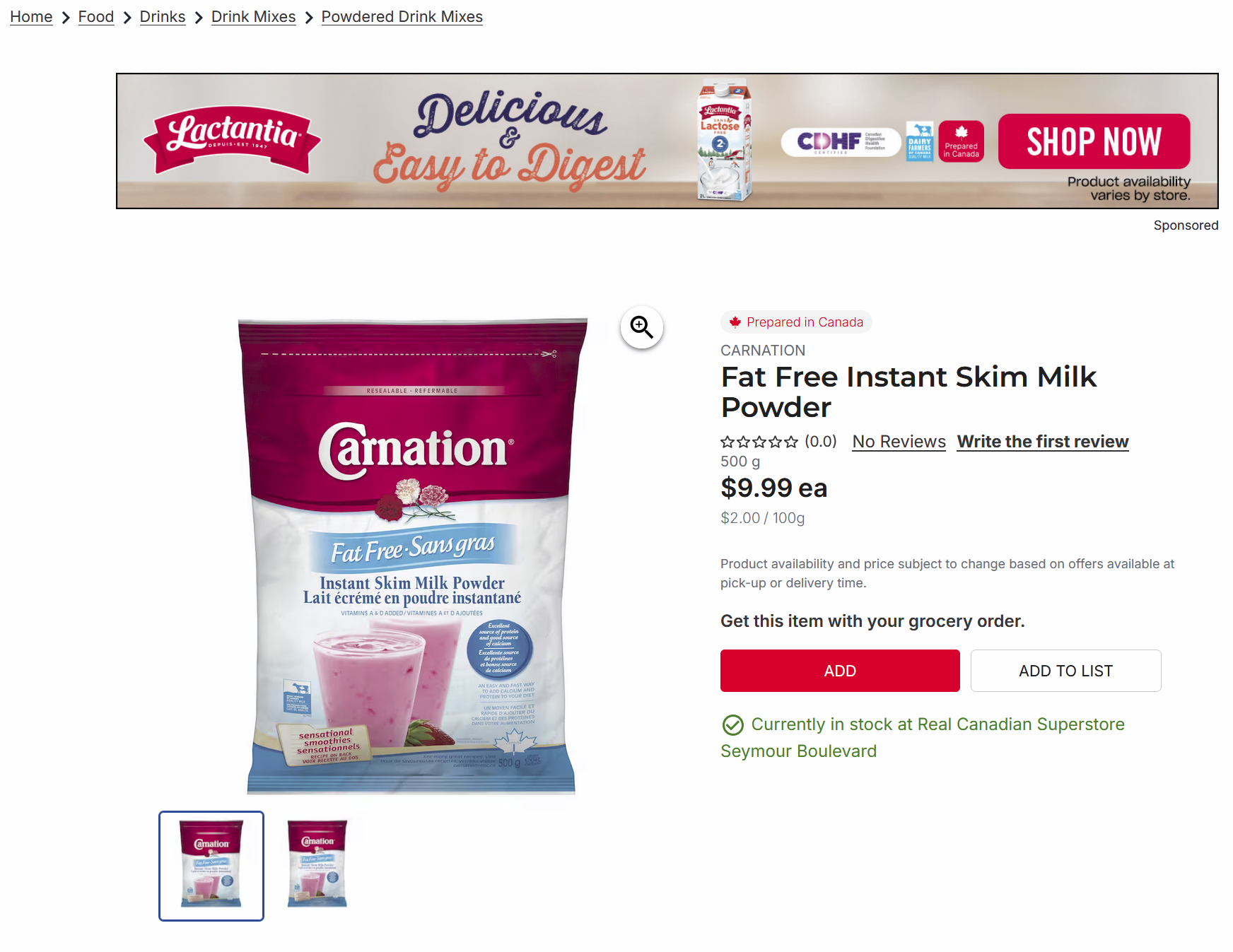
- 20 g egg white powder -> Smoother
- 100 g fine breadcrumbs / rusk -> Smoother
- 285 g crushed ice
Color System (Balanced, Non-Dominant)
- 4.0 g sweet paprika (not smoked)
- 0.06 g turmeric extract (curcumin extract, not powder)
- 0.03 g saffron threads (30 mg)
Saffron preparation
- Crush threads to powder
- Bloom in 15 g water at 45–50°C
- Steep 10–15 minutes
- Add the liquid only (counts toward total water)
Seasonings (Frankfurter-leaning, Poultry-masking)
- 5 g garlic powder
- 5 g onion powder
- 2.5 g ground coriander
- 1.6 g white pepper
- 0.8 g nutmeg
- 0.8 g ground ginger
- 0.4 g mace
- 0.3 g ground cardamom
Casings
- Sheep casings, 22–24 mm
PROCESS
1. Trimming & Pre-Chilling
- Remove all sinew and connective tissue.
- Dice breast and thigh separately into small cubes.
- Chill in freezer until meat reaches 0–1°C (32–34°F).
2. Grinding
Grind breast and thigh separately:
- First pass: 8–10 mm plate
- Second pass: 5–6 mm plate
Keep meat and equipment cold at all times.
3. Emulsification (Order Is Critical)
Step A — Primary Protein Extraction
- Place ground chicken breast in food processor.
- Add all the salt.
- Chop 45–60 seconds.
- Halfway through, add ~100 g crushed ice.
- Target temperature: ≤ 4°C (39°F).
- Result: sticky, elastic paste.
Step B — Thigh Integration
- Add ground chicken thigh.
- Add another ~100 g crushed ice.
- Chop 45–60 seconds.
- Keep temperature ≤ 7°C (45°F).
Step C — Final Binding & Color
Add:
- All spices
- Milk powder
- Egg white powder
- Breadcrumbs
- Remaining ice
- Saffron infusion liquid
- Turmeric extract
- Paprika
Chop 45–60 seconds until fully smooth.
Absolute maximum batter temperature: 10–11°C (50–52°F).
4. Stuffing
- Stuff immediately into 22–24 mm sheep casings.
- Link to desired length.
- Prick all visible air pockets.
Do not rest overnight (fresh sausage).
5. Cooking (Same Day or Next Day)
Poaching
- Water temperature: 74–75°C
- Cooking time: 1 minute per mm casing diameter
- 22–24 mm → 22–24 minutes
- Internal temperature must reach ≥ 72°C (160°F).
Do not exceed water temperature.
6. Cooling
- Transfer immediately to an ice bath for 10 minutes.
- Dry thoroughly.
- Refrigerate or freeze.
STORAGE (No Cure)
- Raw stuffed sausage: max 24 hours refrigerated
- Cooked sausage: 3–4 days refrigerated
- Frozen (raw or cooked): 2–3 months
Do not vacuum-seal raw sausage.
EXPECTED RESULT
- Color: pale warm beige with light orange-gold tone
- Flavor: neutral, frankfurter-style, not chicken-forward
- Texture: firm, elastic, cohesive
- Aroma: classic hot-dog spice profile
- No pink/red cured appearance (by design)
=-=-=-=-=-=-=-=-=-=-=-=-=-=-=-=-=-=-=-=-=-=-=-=-=-=-=-=-=-=-=-=-=-=-=-=-=-=-=-=-=-=-=-=-=-
=-=-=-=-=-=-=-=-=-=-=-=-=-=-=-=-=-=-=-=-=-=-=-=-=-=-=-=-=-=-=-=-=-=-=-=-=-=-=-=-=-=-=-=-=-
At the Start (Massage Heavily): When you first mix the flour, water, yeast, and salt, you must knead (massage) it well for 8 to 10 minutes. This builds the strength so the dough won’t turn into a soupy puddle later.
During the 2-Hour Rise (Leave it Alone): Once kneaded, place it in an oiled bowl, cover it, and leave it completely alone. If you keep massaging or punching it during these 2 hours, you will knock out all the gas, tighten the gluten, and end up with a dense, tough, unstretchable bread.
Relaxation is what allows you to stretch the dough into that long, iconic flatbread shape. If you don’t let it rest alone, the dough will act like a rubber band and snap back every time you try to stretch it.
If your dough is acting like a rubber band and snapping back when you try to stretch it, leave it completely alone for 15 to 20 minutes. Stretch it halfway: Stretch it out as far as it will easily go until it starts fighting you.Walk away: Cover it loosely with a towel and leave it alone on your counter for 15 minutes.Finish stretching: Come back after 15 minutes. The gluten will have relaxed, and you will easily be able to stretch it to its full length without any resistance.
At the Very End (The Final Ridge Massage): Right before baking, you use your fingers to deeply “massage” or press those famous parallel grooves into the top of the bread. This deflates specific rows so the bread bakes with beautiful, alternating crispy ridges and soft troughs.
| Glue Name & Number | Exact Viscosity | Time to Cure (Fixture / Full) | Where It Outperforms Every Other Glue (Its Absolute Specialty) | Targeted Materials / Best For |
|---|---|---|---|---|
| Loctite 222 | Low (1,200 cP Thixotropic) | 10–20 min / 24 hrs | Outperforms on low-strength precision screws; prevents backing out while allowing easy disassembly with hand tools. | Aluminium, brass, and small steel fasteners (under 1/4″). |
| Loctite 242 | Medium (1,200 cP) | 5–15 min / 24 hrs | Outperforms as the universal baseline medium-strength threadlocker for standard machinery bolts. | Active metals like iron, steel, and copper up to 3/4″. |
| Loctite 243 | Medium (1,300 cP) | 5–10 min / 24 hrs | Outperforms 242 specifically on oil-contaminated surfaces, cutting through residual cutting fluids during assembly. | Passive metals like stainless steel, plated parts, and oily steel. |
| Loctite 271 | Low (500 cP) | 10–20 min / 24 hrs | Outperforms on heavy engine blocks and suspension frames as a permanent high-strength red threadlocker. | Heavy-duty iron and steel bolts (up to 1″) requiring heat to remove. |
| Loctite 290 | Low (20 cP) | 20 min / 24 hrs | Outperforms because of its wicking ability; it penetrates pre-assembled, fully torqued fasteners via capillary action. | Pre-assembled metal fasteners, set screws, and instrumentation instrumentation bolts. |
| Loctite PL 300 | Heavy Paste | 20 min / 2 to 7 days | Outperforms on polystyrene foamboard; it forms high-strength interior bonds without melting or dissolving foam backing. | Foam insulation boards, drywall, wood, and concrete. |
| Loctite 401 | Low (100 cP) | 5–20 sec / 24 hrs |
Outperforms on porous materials like leather, wood, and cardboard without completely soaking into the grain. Fast-bonding porous materials |
Wood, cork, paper, leather, cardboard, and standard plastics. |
| Loctite 402 | Low (110 cP) | 5–20 sec / 24 hrs |
Outperforms all instant super glues in high-temperature environments (up to 135°C) without suffering thermal degradation. High-performance, heat-resistant instant bonding |
Engineered plastics, steel, aluminium, and rubber composites. |
| Loctite 403 | Medium (1,200 cP) | 5–20 sec / 24 hrs |
Outperforms in unventilated spaces due to its low-odour chemistry; leaves zero white, frosty residue (blooming) on dark plastics. low-blooming instant adhesive for aesthetic-critical parts. |
Aesthetic plastics, chrome trims, glass, and electronic housings. |
| Loctite 406 | Very Low (20 cP) | 2–10 sec / 24 hrs | Outperforms on difficult rubbers and EPDM elastomers; creates an instant vulcanized bond for custom O-rings. | EPDM, nitrile rubber, silicone rubber, and vulcanized plastics. |
| Loctite 454 | Gel (Non-sagging) | 5–15 sec / 24 hrs | Outperforms on vertical or inverted surface geometry; its thixotropic gel state guarantees zero running or dripping. | Metals, rough woods, unpolished ceramics, and porous leathers. |
| Loctite 460 | Low (40 cP) | 5–20 sec / 24 hrs | Outperforms in optical and lens assemblies; leaves delicate lens glass perfectly clear without cosmetic clouding. | Optical glass, clear acrylics, polycarbonates, and display bezels. |
| Loctite 480 | Medium (150 cP) | 20–50 sec / 24 hrs | Outperforms under severe shock loads and vibration; its black, rubber-toughened core stops microscopic stress fractures. | Metal-to-rubber joints, magnetic assemblies, and tool handles. |
| Generic 502 | Ultra-Low (2–5 cP) | 3–10 sec / 12 hrs | Outperforms at hairline fracture penetration; its water-thin body snaps instantly into perfectly flush micro-seams. | Tight plastic joints, ceramic cracks, hard stone, and miniature models. |
| Loctite PL 500 | Heavy Paste | 30 min / 2 to 7 days | Outperforms on wet landscape masonry; bridges irregular stone gaps and resists freezing outdoor weather conditions. | Brick, stone, slate, timbers, treated wood, and concrete blocks. |
| Loctite 515 | Gel (275,000 cP) | 30 min / 24 hrs | Outperforms on flexible machined assemblies; cures anaerobically into an elastic gasket that stretches with joint movement. | Machined iron, steel, and aluminium mating flanges. |
| Loctite 518 | Gel (80,000 cP) | 4–20 min / 24 hrs | Outperforms as a form-in-place gasket on semi-rigid metal flanged castings, preventing micro-leaks in cast iron housings. | Aluminium gearboxes, iron engine casings, and transmission housings. |
| Loctite 545 | Low (30 cP) | 15–30 min / 24 hrs | Outperforms in fine hydraulic lines; contains no fillers that could clog critical valve bodies or fluid filters. | Metal hydraulic lines, pneumatic system connections, and brass fittings. |
| Loctite 565 | Paste (300,000 cP) | Instant / 24–72 hrs | Outperforms on standard tapered pipe threads; provides an immediate low-pressure seal before full cure [565EN]. | Iron, steel, brass, and copper pipe fittings (up to 2″). |
| Loctite 567 | Paste (500,000 cP) | Instant / 72 hrs | Outperforms on stainless steel, aluminium, and passive metal threads without galling or binding during assembly. | Stainless steel pipes, industrial aluminium lines, and coarse threads. |
| Loctite 577 | Medium-High (24,000 cP) | 15–30 min / 24 hrs | Outperforms on coarse, overhead plumbing lines; its thick paste structure resists gravity to prevent thread wipe-off. | Coarse metal pipe threads, overhead plumbing joints, and valves. |
| Loctite 592 | Paste (350,000 cP) | 4 hours / 72 hrs | Outperforms in high-vibration steam pipes; remains lubricated during assembly and withstands thermal cycling up to 204°C. | High-temperature steam pipes, exhaust studs, and boiler fittings. |
| Loctite 601 | Low (125 cP) | 5–10 min / 24 hrs | Outperforms inside ultra-tight press fits (under 0.1 mm radial gap) requiring maximum torque resistance. | Precision metal pins, tight slip-fit gears, and drive shafts. |
| Loctite 603 | Low (125 cP) | 5–10 min / 24 hrs | Outperforms at retaining unwashed cylindrical bearings; directly consumes light surface oil films. | Oily steel bearings, sintered bushings, and cylindrical sleeves. |
| Loctite 609 | Low (125 cP) | 10 min / 24 hrs | Outperforms at locking standard slip-fit machine keys and motor rotors for straightforward mechanical rebuilds. | Standard steel shafts, metal rotor assemblies, and machine keys. |
| Loctite 638 | High (2,500 cP) | 4 min / 24 hrs | Outperforms at filling large mechanical shaft gaps (up to 0.25 mm) where bearings have spun and worn the housing. | Worn metal housings, loose slip-fit bearings, and heavy splines. |
| Loctite 648 | Medium (500 cP) | 5 min / 24 hrs | Outperforms at holding high-temperature sprockets and gears; maintains structural strength when parts get hot. | High-heat engine gears, industrial sprockets, and metallic keys. |
| B-6000 | Medium-High (3,500 cP) | 5–10 min / 24–48 hrs | Outperforms at rhinestone setting; its chemical formula will not tarnish or dull foil backings on craft crystals. | Foil-backed crystals, glass, plastics, and plated metal jewelry. |
| B-7000 | High (4,000 cP) | 5–10 min / 24–48 hrs | Outperforms at smartphone glass screen replacement; forms a durable, peelable perimeter seal that allows future repairs. | Glass panels, plastic LCD digitizers, and painted phone bezels. |
| T-7000 | High (4,800 cP) | 5–10 min / 24–48 hrs | Outperforms at opaque bezel sealing; its solid black color blocks backlight bleeding on electronic housings. | Black plastic housings, tablet screen frames, and nylon bezels. |
| T-8000 | High (4,800 cP) | 5–10 min / 24–48 hrs | Outperforms on waterproof fabrics and flexible vinyl; stretches and twists without tearing away from materials. | Vinyl fabrics, canvas, rubber canvas boots, leather, and soft textiles. |
| E-8000 | High (5,000 cP) | 10 min / 24–48 hrs | Outperforms on fiber-reinforced polymer jewelry; features self-leveling properties that minimize visible surface bubbles. | Polymer clay, epoxy resins, acrylic fibers, and raw craft woods. |
| Loctite 406 | Very Low (20 cP): Rapid bonding for hard-to-stick rubbers, EPDM, and plastics. |
| Loctite 454 | Gel (Highly viscous): No-drip formula for overhead or vertical surface repairs. |
| Loctite 460 | Low (40 cP): Low-odour and low-whitening formula for sensitive electronic assemblies. |
| Loctite 480 | Medium (150 cP): Black, rubber-toughened formula for high impact and moisture resistance. |
| Loctite 601 | Low (125 cP): Low-viscosity retaining compound for tight-fitting cylindrical joints. |
| Loctite 603 | Low (125 cP): Oil-tolerant retaining compound for cylindrical parts like bearings. |
| Loctite 609 | Low (125 cP): General-purpose retaining compound for press-fit and slip-fit assemblies. |
| Loctite 638 | High (2,500 cP): High-strength retaining compound for larger gaps up to 0.25 mm. |
| Loctite 648 | Medium (500 cP): High-strength, high-temperature retaining compound for gears and sprockets. |
| B-6000 | Medium-High (approx. 3,500 cP): Clear craft glue for jewelry, glass, and rhinestones. |
| B-7000 | High (approx. 4,000 cP): Self-leveling paste used for smartphone screen and electronics repair. |
| T-7000 | High (approx. 4,800 cP): Black, waterproof adhesive designed for sealing bezels and frames. |
| T-8000 | High (approx. 4,800 cP): High-elasticity clear adhesive popular in textile and toy repair. |
| E-8000 | High (approx. 5,000 cP): Acrylic-based clear glue with high fiber elasticity for delicate crafts. |
=============================-=-=-=-=-
=-=-=-=-=-=-=-=-=-=-=-=-=-=-=-=-=-=-=-=-=-=-=-=-=-=-=-=-=-=-=-=-=-=-=-=-=-=-=-=-=-=-=-=-=-
