
Causes of the current state of affairs to be as it is, are many.
No matter what they are, the only thing we can do to change the status quo is to make a decision about what we can do
All our influences in the world comes from the decisions we make about what to do including what to say.
The only thing we can change is ourselves and our decisions, and that may or may not have the desired effect.
2007
=-=-=-=-=-=-=-=-=-=-=-=-=-=-=-=-=-=-=-
After any event, our response can be under or over the optimum response.
It is better to spend some time collecting information and contemplating, the probability of making an optimum decision increases by more information.
However, after some time (after collecting a threshold of data and information) more information will have diminishing return.
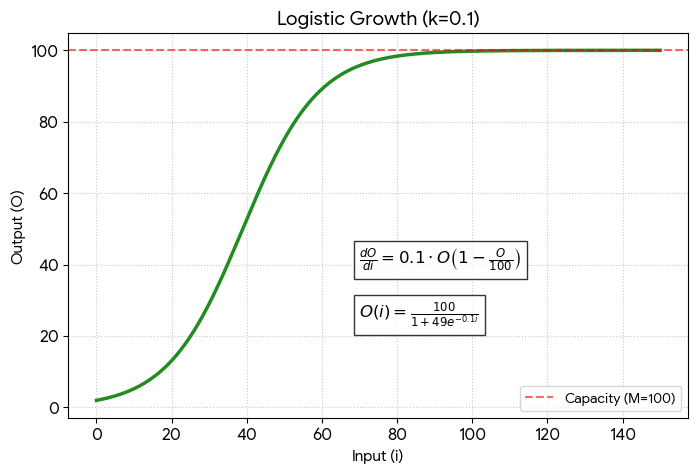
Here O is the probability of optimum decision and I is information collected.
=-=-=-=-=-=-=-=-
Most people reciprocate.
Try 100% giving with 0 expectation in your relation, give the response some time.
You most probably get a reciprocal synergistic response; if not be careful in this relationship.
For Economic Games (Cooperation): In behavioral experiments, when one player acts completely benevolently in an anonymous, one-shot interaction, a significant majority (often over 65% to 80%) of the recipients respond with similar cooperation rather than defection
| A persistent puzzle in the social and biological sciences is the existence of prosocial behavior, actions that benefit others, often at a cost to oneself. Recent theoretical models and empirical studies of indirect reciprocity show that actors behave prosocially in order to develop an altruistic reputation and receive future benefits from third parties. Accordingly, individuals should stop investing in reputations via prosocial behavior when a future benefit (via indirect reciprocity) is unlikely. The conclusion that the absence of reputational incentives necessarily leads to egoistic behavior contrasts sharply with models of heterogeneous social preferences. Such models demonstrate the theoretical plausibility of populations composed of egoists and altruists. Results of Study 1 show that actors classified a priori as egoists respond strategically to reputational incentives, whereas those classified a priori as altruists are less affected by these incentives. While egoists act prosocially when reputational incentives are at stake but not when opportunities for indirect reciprocity are absent, altruists tend to act prosocially regardless of whether reputational incentives are present. These results suggest that apparently altruistic behavior can result from non-strategic altruism or reputation-building egoism. Study 2 demonstrates the robustness of these results and explores indirect reciprocation of others’ prosocial acts. The results show that altruists indirectly reciprocate at higher levels than egoists, and individuals tend to discount others’ prosocial behaviors when they occur in the presence of reputational incentives. As a result, public prosocial behaviors are indirectly reciprocated less than private prosocial behaviors. In line with our argument that altruists pay less attention to reputational incentives, egoists showed a greater tendency than altruists to discount others’ public prosocial behaviors. The results support the growing focus on heterogeneity of individuals’ social preferences in models of altruism and indirect reciprocity. |
=-=-=-=-=-=-=-=-
Examples of Incidents Attributed to Human Error During Nights or Night Shifts
-
Three-Mile Island nuclear reactor
-
Davis–Besse nuclear reactor at Oak Harbor, Ohio
-
Racho Seco nuclear reactor near Sacramento, Calif
-
Chernobyl nuclear plant
-
Space shuttle Challenger accident
-
Launch of the space shuttle Columbia
-
Bhopal Union Carbide tragedy
-
Exxon Valdez accident
-
Estonia ferry accident
-
Peak incidence of single-vehicle motor accidents
-
18% increase in human error incidents in afternoon shift relative to morning shift
-
30% increase in human error incidents on night shift relative to morning shift
https://www.ncbi.nlm.nih.gov/pmc/articles/PMC1854972/
Decision Making
=-=-=-=-=-=-=-=-=-=-
Ladder of Inference
First described by William Isaacs in a 1992 paper by the MIT Center for Organizational Learning,
the Ladder of Inference describes the thinking process that we go through, usually without
realizing it, to get from a fact to a decision or action.
https://asana.com/resources/ladder-of-inference
https://www.mindtools.com/aipz4vt/the-ladder-of-inference
URL: https://thesystemsthinker.com/the-ladder-of-inference/
https://synergycommons.net/resources/the-ladder-of-inference/
==-=-=-=-=-=-=-=-=–=-
Daniel Kahneman:http://en.wikipedia.org/wiki/Thinking,_Fast_and_Slow
Our brain is weak in remembering lists but is good in remembering routes and agents, so to remember a list we should imagine traveling a route related to that list.
Two different ways the brain forms thoughts:
System 1: Fast, automatic, frequent, emotional, stereotypical, subconscious works all the time
System 2: Slow, effortful, infrequent, logical, calculating, conscious we feel that we are the authors of the thoughts of system 2,
but system one keeps whispering suggesting to system 2 and most of the time we are guided by automatic suggestions of system 2.
It is good for most of the time when we are relying on skills.
Relying on intuition for answer of complex questions is very risky
People need protection against their own mistakes and predators.
Most of what we do is just skill and system 1 is fine for that, but system 1 produces simplified answers when it is facing a situation for which it doesn’t have an skilled answer.
If the problems arise in system 1 and we are not aware that system 1 doesn’t have the skill, then system 2 will not be activated to correct it.
There are predictable errors that people make, the only thing we can do is to recognize the situations in which you are likely to make an error.
Institutions can help controlling us from relying on intuition.
If we were in a society that understood the problems of judgement better, we would make better decisions (like using regressive prediction)
People are more intelligent about the problems of other people.
Kahneman https://www.youtube.com/watch?feature=player_embedded&v=i_UVDD7ErJ4
Kahneman suggests: http://www.amazon.ca/Moonwalking-Einstein-Science-Remembering-Everything/dp/0143120530
Intuitive prediction – Defense Technical Information Center
http://www.lse.ac.uk/newsAndMedia/videoAndAudio/channels/publicLecturesAndEvents/player.aspx?id=1251
http://integral-options.blogspot.ca/2012/06/debunking-myth-of-intuition-daniel.html
http://examinedexistence.com/daniel-kahnemans-on-why-we-shouldnt-always-trust-our-gut-feelings/
http://www.inc.com/graham-winfrey/daniel-kahneman-on-why-entrepreneurs-shouldnt-trust-their-gut.html
=================================================================================
Factors that affect how people make choices
1. Situational Factors
2. Personality Traits
3. Group Dynamics – that affect group decision-making
Use Divergent (brainstorming)/Convergent thinking
Step 1 (divergent Thinking): Brainstorm.-The more ideas, the better-Build one idea upon another-Wacky ideas are okay-Don’t evaluate ideas
Step 2 : Blow away and cluster and group similar ideas.
Step 3 (convergent thinking ): Select practical, promising ideas.
We should train ourselves to be ready at any moment, when we are
analyzing a problem, to shift from our normal convergent mode to a divergent mode and back again, taking from the divergency new ideas.
Tell the people that you are starting a divergent mode, otherwise they may get upset or may take the brainstormed ideas as tangent or really serious proposals.
Jones, M. D. (1998). The Thinker’s Toolkit: 14 Powerful Techniques for Problem Solving (Revised edition edition). New York: Crown Business.
==================================================
Fallacy
A fallacy is the use of invalid or otherwise faulty reasoning, or “wrong moves” in the construction of an argument. A fallacious argument may be deceptive by appearing to be better than it really is.
https://en.wikipedia.org/wiki/Fallacy
==================================================
=========================
The utility functions are ordinal
think of an outcome as a set of measurable attributes
An outcome is the result of your decision or action and the state of the world
http://faculty.econ.ucdavis.edu/faculty/bonanno/Youtube%20Recorded%20Lectures%20Decision%20Making.html
http://faculty.econ.ucdavis.edu/faculty/bonanno/Youtube%20Recorded%20Lectures%20Uncertainty%20Risk%20and%20Information.html
http://faculty.econ.ucdavis.edu/faculty/bonanno/Youtube%20Recorded%20Lectures%20Game%20Theory.html
conformity
happiness
Laziness
exploitation
reaction
Conflicting demand
insanity
submission
Union/Integrity
purposefullness
Love/hate
Conformity
reason
Intelligence
Rationalization
Money
family
https://en.wikipedia.org/wiki/Communitarianism
=-=-=-=-=-=-=-=-=-
This study investigates people’s implicit stereotype of the social group of the rich in terms of competence and warmth.
https://journals.sagepub.com/doi/10.1017/prp.2017.8
The Complementary Stereotypes about the Rich and the Poor: A Study in China
https://www.scirp.org/journal/paperinformation.aspx?paperid=72269
Does Perceiving the Poor as Warm and the Rich as Cold Enhance Perceived Social Justice? The Effects of Activating Compensatory Stereotypes on Justice Perception
https://www.frontiersin.org/articles/10.3389/fpsyg.2019.01361/full
Social Class Competence Stereotypes Are Amplified by Socially Signaled Economic Inequality
https://journals.sagepub.com/doi/10.1177/0146167220916640
